Identity Theft Protection: How Monitoring Stops Financial Loss
Monitoring detects the misuse of credentials long before fraud occurs, allowing you to revoke access while your assets remain untouched.
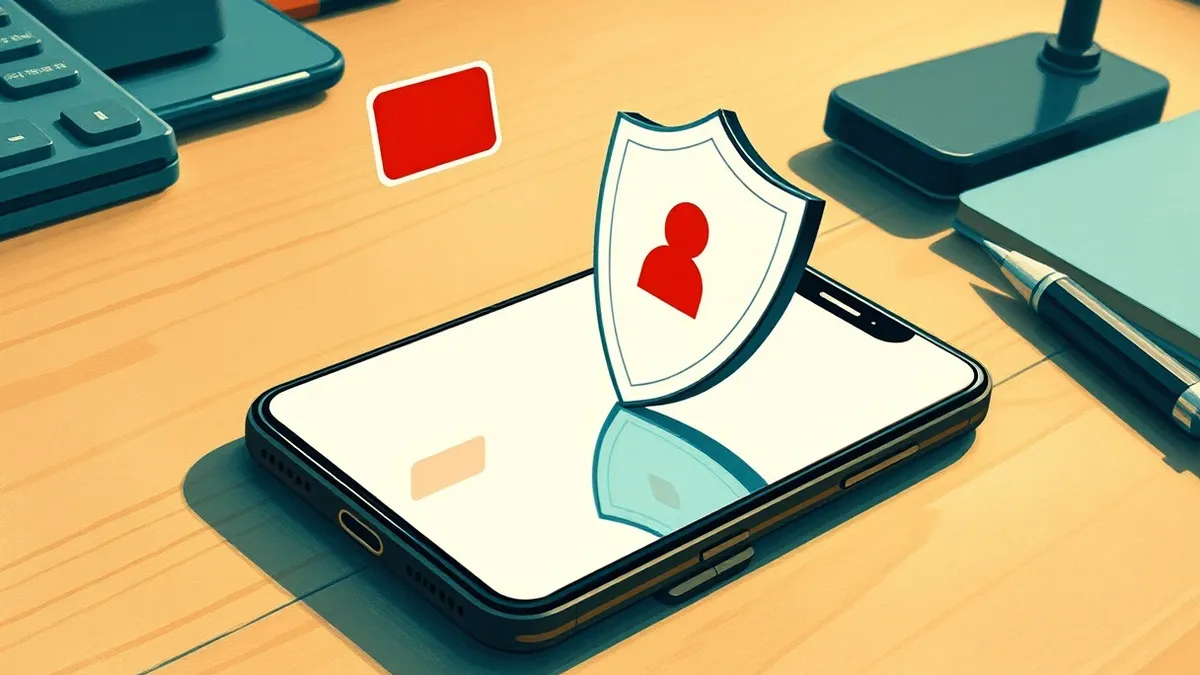
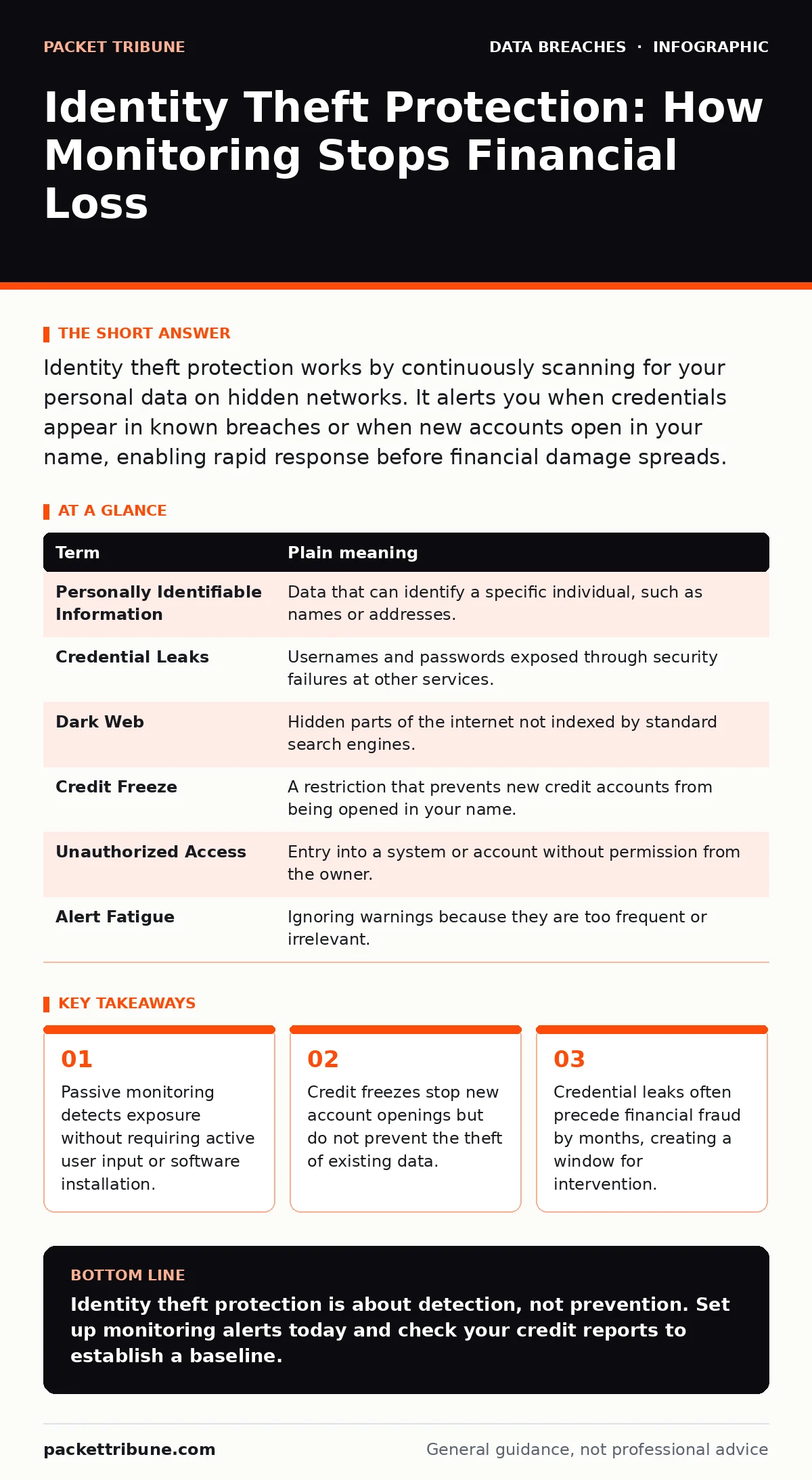
Identity theft protection works by continuously scanning for your personal data on hidden networks. It alerts you when credentials appear in known breaches or when new accounts open in your name, enabling rapid response before financial damage spreads.
The Library Card Analogy
Imagine your personal identity is a library card. The card itself holds value because it grants access to resources. If you lose the physical card, the library does not immediately charge you fines. However, if someone finds it and uses it to borrow books, you only discover the problem when the library sends a notice.
Identity theft protection functions as the library’s lost-and-found system. It does not prevent the card from being stolen. Instead, it alerts you the moment the card is used elsewhere. This distinction matters because prevention is rarely possible once data leaves your control. Detection is the only reliable mechanism.
Defining the Core Terms
You need precise language to understand how these services operate. Many consumers confuse monitoring with prevention, leading to a false sense of security. The terms below clarify the actual mechanisms at work.
| Term | Plain meaning |
|---|---|
| Personally Identifiable Information | Data that can identify a specific individual, such as names or addresses. |
| Credential Leaks | Usernames and passwords exposed through security failures at other services. |
| Dark Web | Hidden parts of the internet not indexed by standard search engines. |
| Credit Freeze | A restriction that prevents new credit accounts from being opened in your name. |
| Unauthorized Access | Entry into a system or account without permission from the owner. |
| Alert Fatigue | Ignoring warnings because they are too frequent or irrelevant. |
The Hidden Cost of Silence
Most people assume that if their bank account balance is unchanged, they are safe. This is a dangerous assumption. Attackers often harvest data for resale before committing fraud. Your name and address might be sold to another criminal group who will try to open a loan months later.
By the time you see a decline in your credit score, the damage is already done. The window for easy recovery has closed. Monitoring services scan for your data in these resale markets. They provide visibility into threats that have not yet caused financial harm.
How Monitoring Actually Works
These services do not scan the entire internet. That is technically impossible. Instead, they subscribe to feeds from data brokers and breach aggregators. They look for patterns that match your profile.
When a match occurs, the service sends an alert. This is not a guarantee of theft. It is an indicator of exposure. You must then decide how to respond. Some alerts are false positives. Others indicate a serious breach of your personally identifiable information. The value lies in the early warning, not the automatic fix.
The Limits of Freezing
A credit freeze is a powerful tool, but it is blunt. It stops new accounts from opening. It does not stop someone from using your existing accounts. If your login credentials are stolen, a freeze does nothing.
You need a layered approach. Freezing stops new debt. Monitoring detects stolen credentials. These two measures address different attack vectors. Relying on only one leaves you vulnerable to the other.
Suppose you freeze your credit. An attacker still has your email password. They reset your bank login and transfer funds. The freeze did not help. You needed unauthorized access detection on your primary accounts.
See also: Prevent Public File Share Exposure With This Technical Checklist · Oversharing on social media examples and how they enable breaches
Practical Steps for Beginners
You do not need complex software to start. You need a process. Follow these steps to establish a baseline of protection.
- Check if your data is already exposed. Use a reputable breach notification service to see if your email addresses appear in known leaks.
- Enable multi-factor authentication on all accounts that hold financial or personal data. This adds a second check that a stolen password cannot bypass.
- Review your credit reports annually. Look for accounts you did not open. Dispute any errors immediately.
These steps are free or low-cost. They do not replace professional monitoring but they reduce your risk significantly.
Managing Alert Noise
One reason people abandon monitoring is alert fatigue. If you receive ten alerts a week, you will stop reading them. Configure your settings to receive only high-severity notifications.
Ignore low-risk alerts, such as a data broker listing your name. Focus on alerts about new credit inquiries or password exposure. This keeps the signal clear. You want to act on threats, not manage a inbox of warnings.
The Role of Hygiene
Monitoring is reactive. You still need proactive habits. Use unique passwords for each service. This limits the damage of a single credential leak.
Consider how encryption at rest protects data on servers. You cannot control this, but you can choose services that offer it. For your own devices, ensure your hard drive is encrypted. If your laptop is stolen, the thief cannot read your files without the decryption key.
This reduces the value of your physical device to an attacker. It makes you a less attractive target.
Key takeaways
- Passive monitoring detects exposure without requiring active user input or software installation.
- Credit freezes stop new account openings but do not prevent the theft of existing data.
- Credential leaks often precede financial fraud by months, creating a window for intervention.
Identity theft protection is about detection, not prevention. Set up monitoring alerts today and check your credit reports to establish a baseline.
Frequently asked questions
Can I reverse identity theft if I catch it early?
Yes, early detection allows you to close compromised accounts and dispute fraudulent charges before significant financial loss occurs.
Is free monitoring sufficient for high-risk individuals?
Free services often lack dark web scanning and credit monitoring. High-risk individuals benefit from paid services that offer faster alerts and recovery assistance.
How long does it take for stolen data to be used?
There is no fixed timeline. Data may be used immediately for small purchases or held for months before large fraud attempts.
Do I need to monitor my children’s identities?
Yes, children are targets because they have clean credit histories. Set up monitoring for them and freeze their credit files if possible.
How this guide was produced: written by the Packet Tribune editorial team with AI assistance, checked against the public references listed below, and reviewed when the facts change. See our editorial policy or report an error.