Is doxxing a crime? Legal status, corporate liability and response steps
Doxxing shifts from harassment to criminal liability when it enables physical harm or facilitates further unauthorized access to restricted systems.

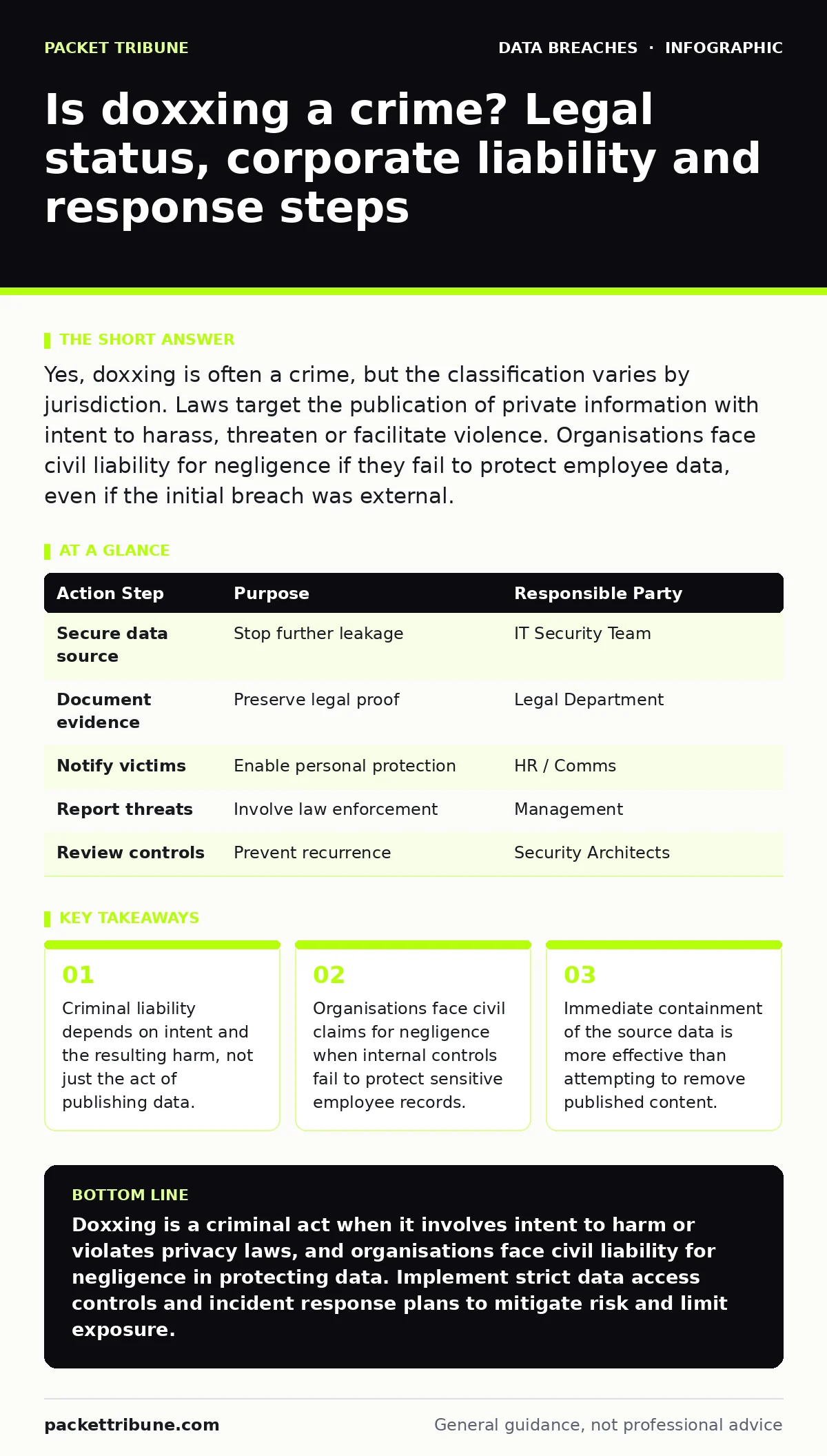
Yes, doxxing is often a crime, but the classification varies by jurisdiction. Laws target the publication of private information with intent to harass, threaten or facilitate violence. Organisations face civil liability for negligence if they fail to protect employee data, even if the initial breach was external.
Is doxxing a crime in your jurisdiction?
Doxxing is not a single global offence, but most jurisdictions criminalise the publication of private information when it causes harm. The legal definition often hinges on intent. If you publish data to harass, threaten or incite violence against an individual, you breach criminal statutes in many regions. Some laws specifically address "cyberstalking" or "non-consensual sharing of private material". The absence of a specific "doxxing law" does not mean the act is legal. General harassment, privacy or data protection laws often apply instead.
What distinguishes illegal doxxing from public information?
The legality depends on the sensitivity of the data and the context of its publication. Information already public, such as a business address listed in a directory, is generally not protected. Combining disparate public records to reveal a private home address may cross into illegality if done with malicious intent. Private data, such as medical records, financial details or personal contact information, is protected by data protection regulations. Publishing this data without consent is a violation regardless of intent. The harm caused to the victim determines the severity of the legal consequence.
How does data protection law apply to doxxing?
Data protection frameworks impose strict duties on organisations that hold personal information. If an organisation fails to secure employee or customer data, it breaches its legal obligations. This breach can facilitate doxxing by making private details available to malicious actors. The organisation may face regulatory fines for failing to implement appropriate technical and organisational measures. Civil lawsuits from affected individuals are common. The defence of "we were hacked" rarely absolves an organisation of liability if basic security controls were missing. You must demonstrate due diligence in protecting sensitive data.
When do organisations face civil liability for doxxing?
Organisations face civil liability when their negligence contributes to the exposure of private data. This often occurs after a data breaches incident where sensitive employee records are leaked. If attackers use this data to doxx staff, the organisation may be sued for failing to prevent the initial exposure. Courts examine whether the organisation followed industry standards for data security. Lack of encryption at rest for sensitive databases is a common failure point. Even if the doxxing is performed by a third party, the organisation that leaked the data shares responsibility for the resulting harm.
How do internal controls prevent doxxing sources?
Strong internal controls reduce the risk of data leakage that enables doxxing. Implementing strict access controls ensures only authorised personnel can view sensitive information. Regular audits of user permissions help identify excessive access rights. Mobile device management policies prevent data loss from lost or stolen devices. Training staff to recognise credential leaks stops attackers from gaining initial access. You must treat employee data with the same care as customer data. Neglecting internal data hygiene creates a high-value target for attackers seeking to doxx staff.
See also: API Vulnerabilities Explained: How Hidden Doors Risk Your Data
What is the role of data scraping in doxxing?
Attackers often use data scraping to aggregate public information into detailed profiles. This process involves automated collection of data from social media, public records and websites. While scraping public data may be legal, using it to harass or threaten individuals is not. Organisations can mitigate this risk by limiting the amount of personal information displayed publicly. Reviewing social media privacy settings helps reduce the data available for scraping. You should assume that any public data can be aggregated and used maliciously. Limiting exposure reduces the fuel for doxxing campaigns.
How should you respond to a doxxing incident?
Immediate action is required to limit harm and preserve evidence. Secure the source of the leaked data to prevent further exposure. Document all instances of the published information, including timestamps and sources. Report the incident to law enforcement if threats of violence are present. Notify affected individuals so they can take protective measures. Engage legal counsel to assess liability and potential claims. Do not attempt to delete or alter evidence. Preservation is critical for any subsequent legal or investigative process. Swift containment prevents the situation from escalating.
| Action Step | Purpose | Responsible Party |
|---|---|---|
| Secure data source | Stop further leakage | IT Security Team |
| Document evidence | Preserve legal proof | Legal Department |
| Notify victims | Enable personal protection | HR / Comms |
| Report threats | Involve law enforcement | Management |
| Review controls | Prevent recurrence | Security Architects |
What are the long-term consequences of doxxing?
Doxxing causes lasting psychological and professional harm to victims. The published information remains online indefinitely, even after the initial incident subsides. Victims may face stalking, harassment or physical threats. Professional reputations can be damaged by association with the leaked data. Organisations suffer reputational harm and loss of trust. Recruitment may become difficult if employees fear for their safety. The financial cost of legal defence and remediation is significant. Long-term monitoring of online presence is often necessary to manage residual risks.
How do you protect staff from targeted doxxing?
Proactive measures reduce the risk of staff becoming targets. Conduct regular risk assessments to identify high-value targets within the organisation. Provide security awareness training that includes recognising social engineering tactics. Implement technical controls such as multi-factor authentication to protect accounts. Review public-facing information to remove unnecessary personal details. Establish a clear incident response plan for doxxing scenarios. Ensure staff know whom to contact if they feel threatened. A culture of security awareness helps prevent the initial data exposure.
Key takeaways
- Criminal liability depends on intent and the resulting harm, not just the act of publishing data.
- Organisations face civil claims for negligence when internal controls fail to protect sensitive employee records.
- Immediate containment of the source data is more effective than attempting to remove published content.
Doxxing is a criminal act when it involves intent to harm or violates privacy laws, and organisations face civil liability for negligence in protecting data. Implement strict data access controls and incident response plans to mitigate risk and limit exposure.
Frequently asked questions
Can I sue someone for doxxing me?
You may have grounds for a civil lawsuit if the doxxing resulted in harm, harassment or violation of privacy laws. Consult a legal professional to assess your specific case.
Is doxxing a federal crime?
Federal laws often address harassment, stalking and threats across state lines. Whether doxxing itself is a federal crime depends on the specific actions and jurisdiction involved.
How do I remove doxxed information from the internet?
Contact website administrators to request removal based on privacy violations. Legal takedown notices may be necessary. Search engine delisting requests can reduce visibility but do not delete the source.
Does insurance cover doxxing incidents?
Cyber insurance policies may cover costs related to data breaches and legal defence. Review your policy terms carefully to understand coverage limits and exclusions for harassment or privacy violations.
How this guide was produced: written by the Packet Tribune editorial team with AI assistance, checked against the public references listed below, and reviewed when the facts change. See our editorial policy or report an error.