AI Data Centers: Definition, Architecture and Operational Reality
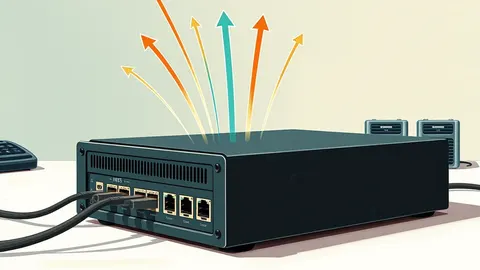
AI data centers diverge from traditional facilities by prioritising high-density compute clusters and specialised cooling over standard server virtualisation practices.
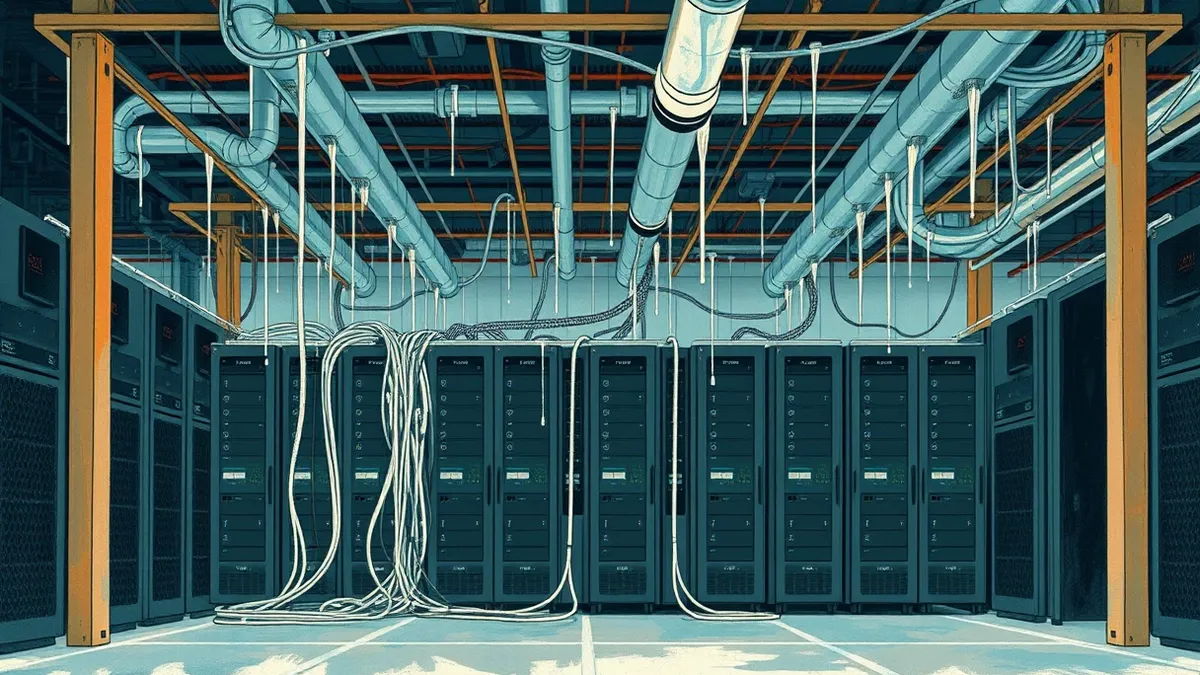
An AI data centre is a facility engineered for intensive artificial intelligence workloads. It combines high-density graphics processing units, specialised cooling systems and high-bandwidth networking to handle massive parallel computing tasks that standard servers cannot sustain efficiently.
The Kitchen Analogy for Compute Density
Imagine a traditional kitchen where chefs prepare individual meals one at a time. This represents standard web hosting or transactional databases. Now imagine a commercial kitchen preparing ten thousand identical meals simultaneously. This is an artificial intelligence data centre. The difference lies not in the ingredients, but in the simultaneous processing power and the heat generated. You need specialised equipment to handle the volume without burning down the building. The architecture changes entirely to support this parallelism.
Defining the AI Data Centre
An AI data centre is a physical facility designed specifically to host and support artificial intelligence workloads. Unlike general-purpose data centres that host a mix of applications, these facilities prioritise high-density computing resources. They house thousands of graphics processing units or tensor processing units working in parallel.
The defining characteristic is the density of compute power per square metre. Standard facilities cannot support this density without overheating. The term emerges from the need to cluster specialised hardware together to reduce latency between processors. This clustering allows for the rapid exchange of data required during model training and inference.
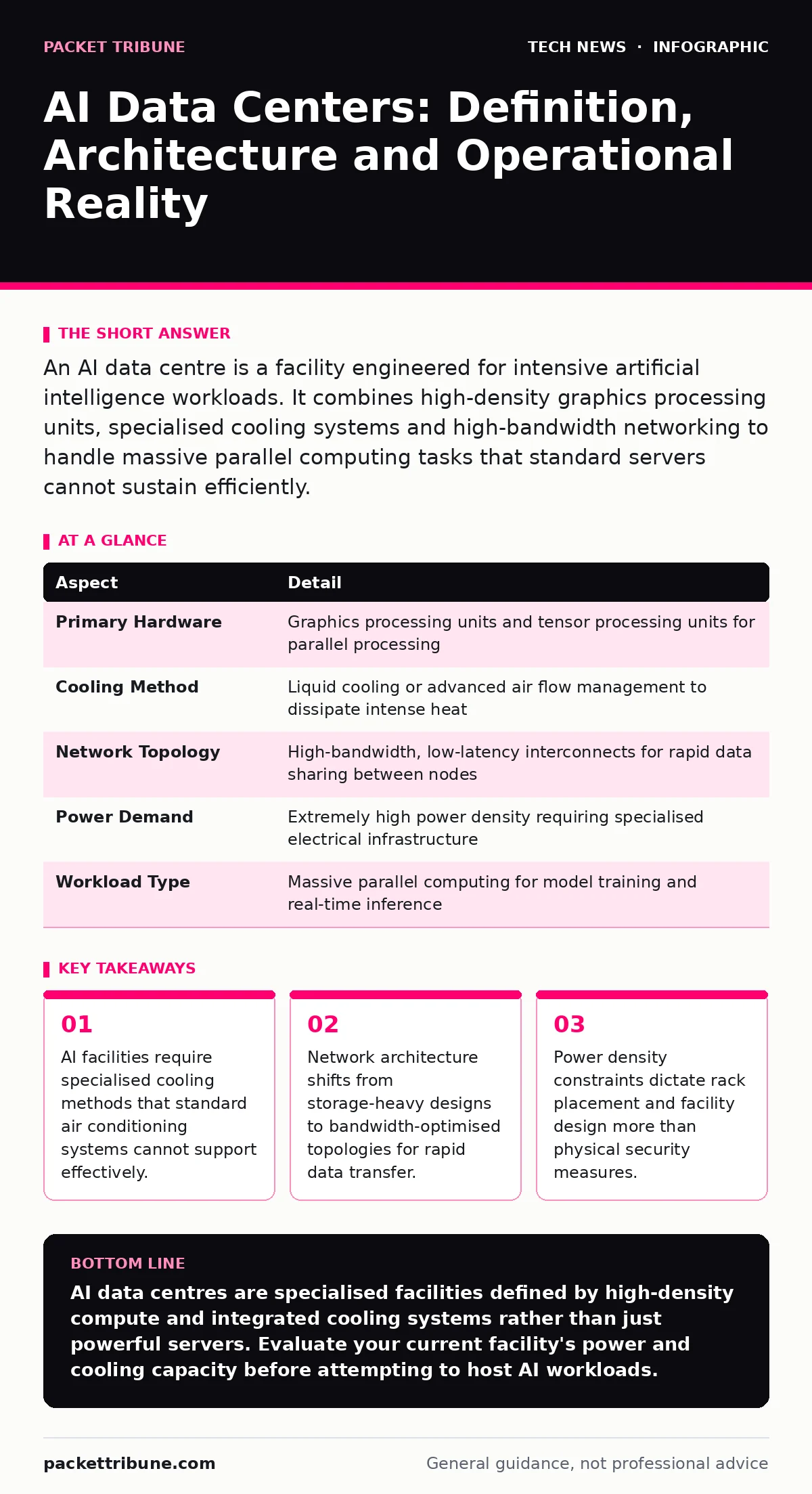
| Aspect | Detail |
|---|---|
| Primary Hardware | Graphics processing units and tensor processing units for parallel processing |
| Cooling Method | Liquid cooling or advanced air flow management to dissipate intense heat |
| Network Topology | High-bandwidth, low-latency interconnects for rapid data sharing between nodes |
| Power Demand | Extremely high power density requiring specialised electrical infrastructure |
| Workload Type | Massive parallel computing for model training and real-time inference |
Where the Term Comes From in Practice
The concept arises from the limitations of general-purpose central processing units. Standard processors handle sequential tasks well but struggle with the massive matrix multiplications required by neural networks. AI data centres cluster thousands of specialised accelerators together. This clustering creates a distinct operational model. You cannot simply add more standard servers to handle AI workloads efficiently.
The cost of power and cooling becomes prohibitive. The term "AI data centre" signals a shift in infrastructure priorities. It indicates a facility built for throughput rather than versatility. This distinction matters for procurement and energy planning. Facilities designed for AI often exclude traditional virtualisation layers to reduce overhead.
Day-to-Day Operational Realities
Running an AI data centre involves managing heat and power as primary constraints. Operators monitor power usage effectiveness metrics closely. Cooling systems must respond instantly to load spikes. A sudden increase in training jobs can raise temperatures rapidly. Liquid cooling systems often circulate coolant directly to processor chips. This method removes heat more efficiently than air alone. Network engineers focus on interconnect bandwidth.
Data must move between processors faster than it can be computed. Bottlenecks in the network stall the entire cluster. Maintenance schedules differ significantly from traditional facilities. You cannot easily swap out a standard server blade. These systems require planned downtime or hot-swappable specialised components. Power redundancy must be absolute. A brief interruption can corrupt large training datasets.
What People Usually Get Wrong
Many assume AI data centres are simply standard facilities with more graphics cards. This view ignores the thermal and electrical implications. You cannot retrofit a standard building easily. The floor loading capacity often needs reinforcement. Electrical substations may need upgrading to handle the current draw. Another common error is underestimating the network requirements.
Standard network switches cannot handle the traffic volume between accelerators. Specialised interconnect fabrics are required. These fabrics are expensive and complex to configure. Ignoring this leads to poor performance despite having powerful hardware. The facility must be designed as an integrated system. Compute, cooling and networking are inseparable variables. Changing one affects the others significantly.
See also: OAuth vs API Key: When to Use Tokens and When to Use Secrets · Different Types of Load Balancers: Architecture and Selection
The Hidden Cost of Efficiency
Efficiency in AI data centres often comes at the cost of flexibility. Specialised hardware is difficult to repurpose. If the workload changes, the hardware may become obsolete quickly. This creates a risk of stranded assets. Operators must balance current performance needs with future uncertainty. Liquid cooling systems are efficient but difficult to modify. Adding new racks may require reconfiguring the entire cooling loop.
This reduces agility compared to standard facilities. The lock-in effect is real. Choosing a specific cooling or interconnect technology limits future options. You must plan for the entire lifecycle of the hardware. Decommissioning these facilities also presents challenges. Specialised components require careful disposal or recycling. Standard data centre teardown procedures do not apply.
Security Implications for Unique Architectures
Security in AI data centres extends beyond traditional perimeter defence. The physical density creates new attack surfaces. A physical breach can impact thousands of processors at once. Intrusion detection systems must monitor environmental sensors closely. Temperature anomalies can indicate tampering or malfunction. Network segmentation is critical. Compromising one node could allow lateral movement to many others. The high value of data in transit requires strong encryption.
You might implement digital signatures to verify the integrity of software updates. This ensures that only authorised code runs on the accelerators. Traditional virtualisation security layers are often absent. This means the hypervisor is not the primary defence. Security must be built into the hardware and network fabric. Monitoring for anomalous network traffic patterns is essential. Standard firewall rules may not detect sophisticated attacks on interconnect fabrics.
Integrating with Broader Infrastructure
AI data centres do not operate in isolation. They connect to broader enterprise networks and cloud environments. This integration requires careful planning for data flow. Load balancers help distribute incoming inference requests across the cluster. They ensure no single node becomes overwhelmed. For external communications, DNSSEC adds a layer of security to domain name resolution. This prevents attackers from redirecting traffic to malicious servers.
When data moves between the AI facility and other systems, email security protocols may be needed for alerts and reports. The facility also relies on APIs to manage resources programmatically. These interfaces allow automation of scaling and maintenance tasks. However, they also expose the system to automated attacks. Securing these endpoints is as important as securing the physical hardware. The integration points are often the weakest links.
Future Trends in Facility Design
The future of AI data centres involves greater integration of renewable energy. High power demands make sustainability a key concern. Facilities may locate near renewable energy sources to reduce costs and carbon footprint. Modular designs will become more common. These allow for easier expansion and maintenance. Pre-fabricated racks with integrated cooling will reduce deployment time. The separation of compute and storage will continue.
Edge computing may handle some inference tasks. This reduces the load on central facilities. However, training large models will remain centralised. The trend is towards specialised, high-efficiency facilities. General-purpose data centres will host less AI work. This bifurcation will shape infrastructure investment for years. Operators must adapt to these changing requirements. Flexibility and efficiency will remain competing priorities.
Conclusion of Operational Strategy
Operating an AI data centre requires a holistic view of infrastructure. You cannot optimise one component in isolation. Compute, cooling, power and network must work together. The high density creates unique risks and costs. Planning for the entire lifecycle is necessary. This includes decommissioning and disposal. Security must adapt to the lack of virtualisation layers. Physical and network security are equally important. Integration with broader systems requires careful design. The future will bring more specialised and efficient designs. Staying informed about these trends is key. You must balance performance with sustainability and security.
Key takeaways
- AI facilities require specialised cooling methods that standard air conditioning systems cannot support effectively.
- Network architecture shifts from storage-heavy designs to bandwidth-optimised topologies for rapid data transfer.
- Power density constraints dictate rack placement and facility design more than physical security measures.
AI data centres are specialised facilities defined by high-density compute and integrated cooling systems rather than just powerful servers. Evaluate your current facility's power and cooling capacity before attempting to host AI workloads.
Frequently asked questions
Can I convert my existing data centre into an AI data centre?
Conversion is often impractical due to power and cooling limitations. You would likely need to upgrade electrical infrastructure and install liquid cooling systems. This cost often exceeds building a new facility.
What is the difference between an AI server and an AI data centre?
An AI server is a single unit containing specialised processors. An AI data centre is a facility housing thousands of these servers with integrated cooling, power and network systems designed for their specific needs.
Do AI data centres require more security than standard data centres?
They require different security measures. The high density and value of compute resources create unique risks. Physical security and network segmentation are critical due to the lack of traditional virtualisation layers.
How do AI data centres handle power outages?
They rely on advanced uninterruptible power supply systems and backup generators. The high power density requires rapid switchover to prevent data corruption and hardware damage. Redundancy is built into every power path.
How this guide was produced: written by the Packet Tribune editorial team with AI assistance, checked against the public references listed below, and reviewed when the facts change. See our editorial policy or report an error.