CISA KEV Due Dates: Practical Patching for Small Teams
The CISA Known Exploited Vulnerabilities catalog forces a hard deadline for patching, turning theoretical risk into an immediate operational requirement for small businesses without dedicated security teams.

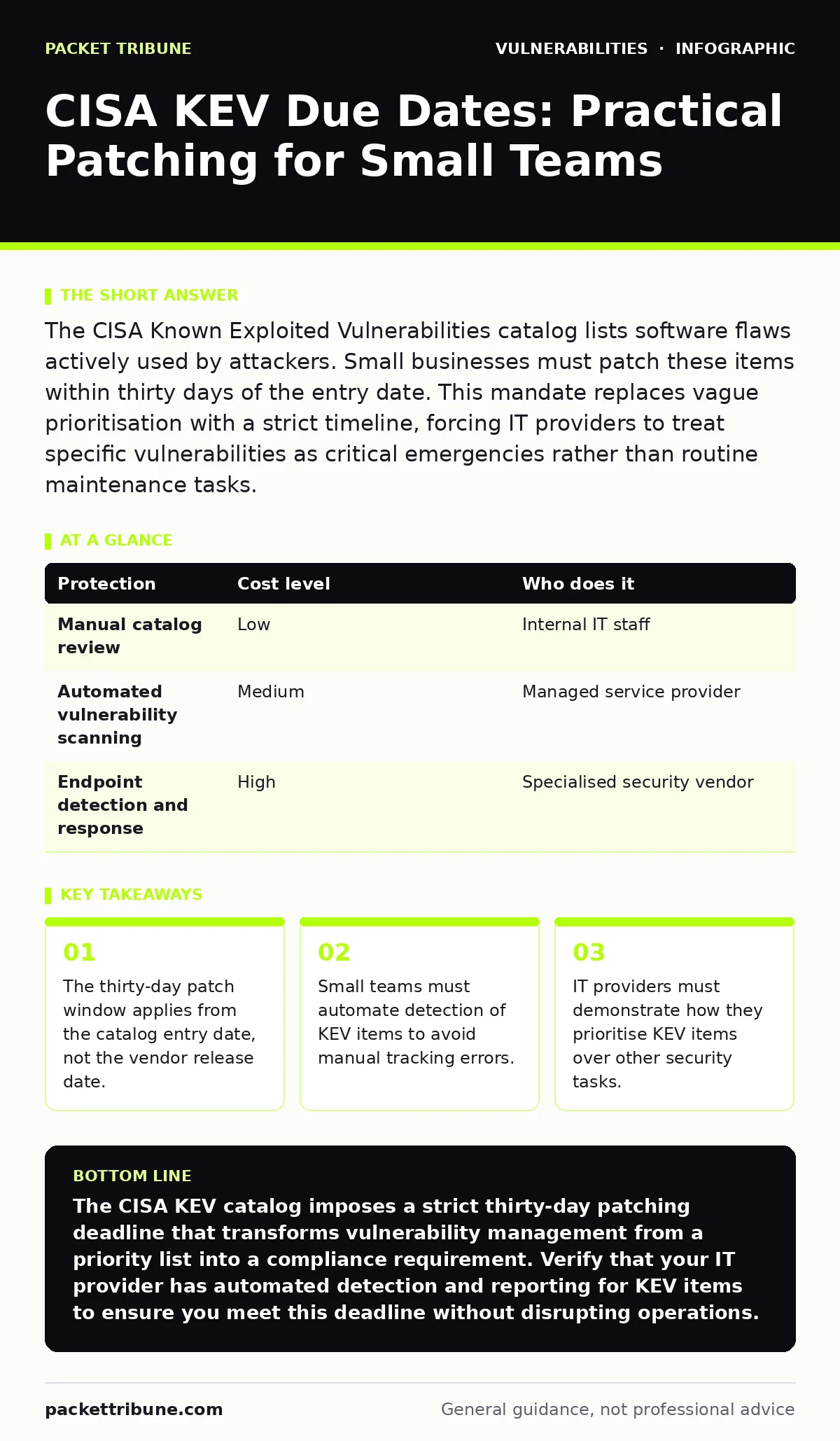
The CISA Known Exploited Vulnerabilities catalog lists software flaws actively used by attackers. Small businesses must patch these items within thirty days of the entry date. This mandate replaces vague prioritisation with a strict timeline, forcing IT providers to treat specific vulnerabilities as critical emergencies rather than routine maintenance tasks.
The Thirty-Day Compliance Clock
The CISA Known Exploited Vulnerabilities (KEV) catalog operates on a strict timeline. When CISA adds a vulnerability to the list, you have thirty calendar days to apply the patch. This clock starts on the day the entry appears, not when the software vendor releases the fix. This distinction creates a hidden pressure point for small teams. Vendors often release patches weeks or months before CISA confirms active exploitation. You must track the catalog date, not the patch release date, to remain compliant.
This timeline removes ambiguity from your security posture. You no longer need to debate whether a flaw is serious. If it is in the catalog, it is treated as critical. This shifts the burden from risk assessment to execution. Your team must have a process that identifies KEV items immediately and schedules remediation within the window. Delaying beyond thirty days exposes you to liability and increases the likelihood of a successful attack.
Why Small Scale Faces Unique Pressure
Small businesses often lack dedicated security analysts. You rely on generalist IT staff or external providers. The KEV catalog simplifies prioritisation but accelerates the workload. Large enterprises have teams that monitor feeds and automate patching. Small teams often handle updates manually or during broad maintenance windows. The thirty-day deadline forces a change in workflow. You cannot wait for quarterly updates if a KEV item appears mid-cycle.
The cost of inaction is higher for small organisations. You have fewer backups and less redundancy. A successful exploit can halt operations entirely. The KEV catalog acts as a filter, telling you exactly which vulnerabilities matter most. It prevents you from wasting time on low-risk flaws while high-risk items remain open. However, it also demands that you react quickly. You must integrate catalog monitoring into your daily routine.
| Protection | Cost level | Who does it |
|---|---|---|
| Manual catalog review | Low | Internal IT staff |
| Automated vulnerability scanning | Medium | Managed service provider |
| Endpoint detection and response | High | Specialised security vendor |
Integrating KEV into Daily Operations
You must treat the KEV catalog as a primary data source for your patching strategy. Most modern vulnerability scanners can filter for KEV items. Configure your tools to highlight these entries prominently. When a scan runs, the results should separate KEV items from standard vulnerabilities. This visual distinction helps your team understand urgency. You should review these results weekly, if not daily.
Automation reduces the risk of human error. Manual tracking of thirty-day deadlines is prone to oversight. Suppose a staff member misses a catalog update. The clock keeps ticking. You need a system that alerts you when a KEV item is detected and when the deadline approaches. This might involve integrating your scanner with your ticketing system. Create automatic tickets for KEV items with a due date set to thirty days from discovery. This ensures accountability and tracks progress.
What to Ask Your IT Provider
If you outsource your IT, your provider must understand the KEV requirements. You need to verify that their processes align with the thirty-day mandate. Do not assume that general maintenance covers these items. Ask specific questions about their workflow. You should request evidence of how they handle KEV items differently from other patches. This demonstrates their capability to manage urgent threats.
- How do you detect when a vulnerability is added to the CISA KEV catalog?
- What is your average time to patch a KEV item after detection?
- Do you provide weekly reports listing all KEV items found and their status?
- How do you handle systems that cannot be patched immediately due to compatibility?
- Who is responsible for verifying that the patch was applied successfully?
These questions reveal the depth of their security maturity. A provider who cannot answer these clearly may not be equipped to handle the KEV timeline. You need a partner who treats the catalog as a binding constraint. Their response should include specific tools and processes, not just general assurances.
Handling Legacy and Unpatchable Systems
Not every system can be patched within thirty days. Legacy software may lack support. Virtual patching or network segmentation becomes necessary. You must identify these systems early. If a critical server runs unsupported software, you cannot wait for a vendor fix that will never come. You need a compensating control. This might involve isolating the system from the internet or restricting access to trusted users only.
Document every exception clearly. Explain why the patch cannot be applied and what controls mitigate the risk. This documentation protects you if an audit occurs. It shows that you made a deliberate decision based on technical constraints. Regularly review these exceptions. As new software becomes available, migrate away from vulnerable legacy systems. The goal is to reduce the number of systems that require exceptions.
See also: CVSS Environmental Scores: Why Base Scores Mislead Risk Teams · Insecure File Permissions Explained: How Access Controls Fail
The Hidden Cost of Emergency Patching
Patching under pressure is expensive. Rushing to meet the thirty-day deadline often leads to errors. You might apply a patch that breaks a critical application. This causes downtime that outweighs the security benefit. To avoid this, test patches in a staging environment first. This step takes time but prevents costly failures. You must balance speed with stability.
Your IT provider should have a testing protocol for KEV items. They cannot simply push updates to production. Ask about their testing process. If they skip testing, you risk operational disruption. The KEV catalog forces speed, but you must maintain quality. Plan for regular maintenance windows that allow for testing and deployment. This reduces the need for emergency actions.
Beyond the Catalog: Proactive Measures
The KEV catalog is reactive. It lists flaws that are already being exploited. You should also look for emerging threats. Monitor vendor advisories and security news. This helps you anticipate future KEV entries. You can prepare patches before they become mandatory. This proactive approach reduces the pressure of the thirty-day deadline.
Consider using risk-based vulnerability management techniques. This involves assessing the impact of a flaw on your specific environment. Not all KEV items pose equal risk. If a vulnerable service is not accessible from the internet, the risk is lower. You can prioritise patches based on exposure and criticality. This allows you to manage resources more effectively.
Ensuring Long-Term Compliance
Compliance with the KEV catalog is an ongoing process. You must continuously monitor for new entries. Integrate this monitoring into your regular security operations. Do not treat it as a one-time project. Establish a routine that includes scanning, reporting, and patching. This routine becomes part of your organisational culture.
Review your processes quarterly. Identify bottlenecks and areas for improvement. If you consistently miss deadlines, invest in better tools or staff training. The goal is to make patching KEV items as routine as any other IT task. This reduces stress and improves security. By embedding KEV compliance into your operations, you build resilience against evolving threats.
Key takeaways
- The thirty-day patch window applies from the catalog entry date, not the vendor release date.
- Small teams must automate detection of KEV items to avoid manual tracking errors.
- IT providers must demonstrate how they prioritise KEV items over other security tasks.
The CISA KEV catalog imposes a strict thirty-day patching deadline that transforms vulnerability management from a priority list into a compliance requirement. Verify that your IT provider has automated detection and reporting for KEV items to ensure you meet this deadline without disrupting operations.
Frequently asked questions
Does the thirty-day clock start when the patch is released?
No, the clock starts on the date CISA adds the vulnerability to the Known Exploited Vulnerabilities catalog, which may be different from the vendor release date.
What happens if we cannot patch a system within thirty days?
You must implement compensating controls such as network segmentation or virtual patching and document the risk acceptance with a clear mitigation plan.
Can we rely on automatic updates for KEV compliance?
Automatic updates help, but you must verify that they cover all KEV items and that the patches do not break critical applications in your specific environment.
How do we know if a vulnerability is in the KEV catalog?
Most vulnerability scanners and security tools can filter for KEV items. Configure your tools to highlight these entries and review them regularly.
How this guide was produced: written by the Packet Tribune editorial team with AI assistance, checked against the public references listed below, and reviewed when the facts change. See our editorial policy or report an error.